Every discipline below runs on the same floor and answers to the same inspector. Open one for the full list of what the shop does in it.
Steel Fabrication
Cutting
Forming and Bending
Welding
Machining and Drilling
Fit-Up and Assembly
Finishing
Quality Control
Engineering and Production Support
Project CapabilitiesStructural steel, pressure vessels and custom metal fabrication.
Open the Steel Fabrication pageStructural steel, miscellaneous metals and custom flare steel are the core of the shop's work, in carbon steel, stainless steel and aluminum. Alongside a structural package the shop builds what goes with it: skids, frames, platforms, stairs, handrails, and equipment bases and supports. Larger work includes power plant silos, process piping, hoppers and pressure vessels, along with oil field fabrication. One project can mix all of those without changing shops.
Band saw, cold saw, plasma and oxy-fuel cutting on plate and structural shapes.
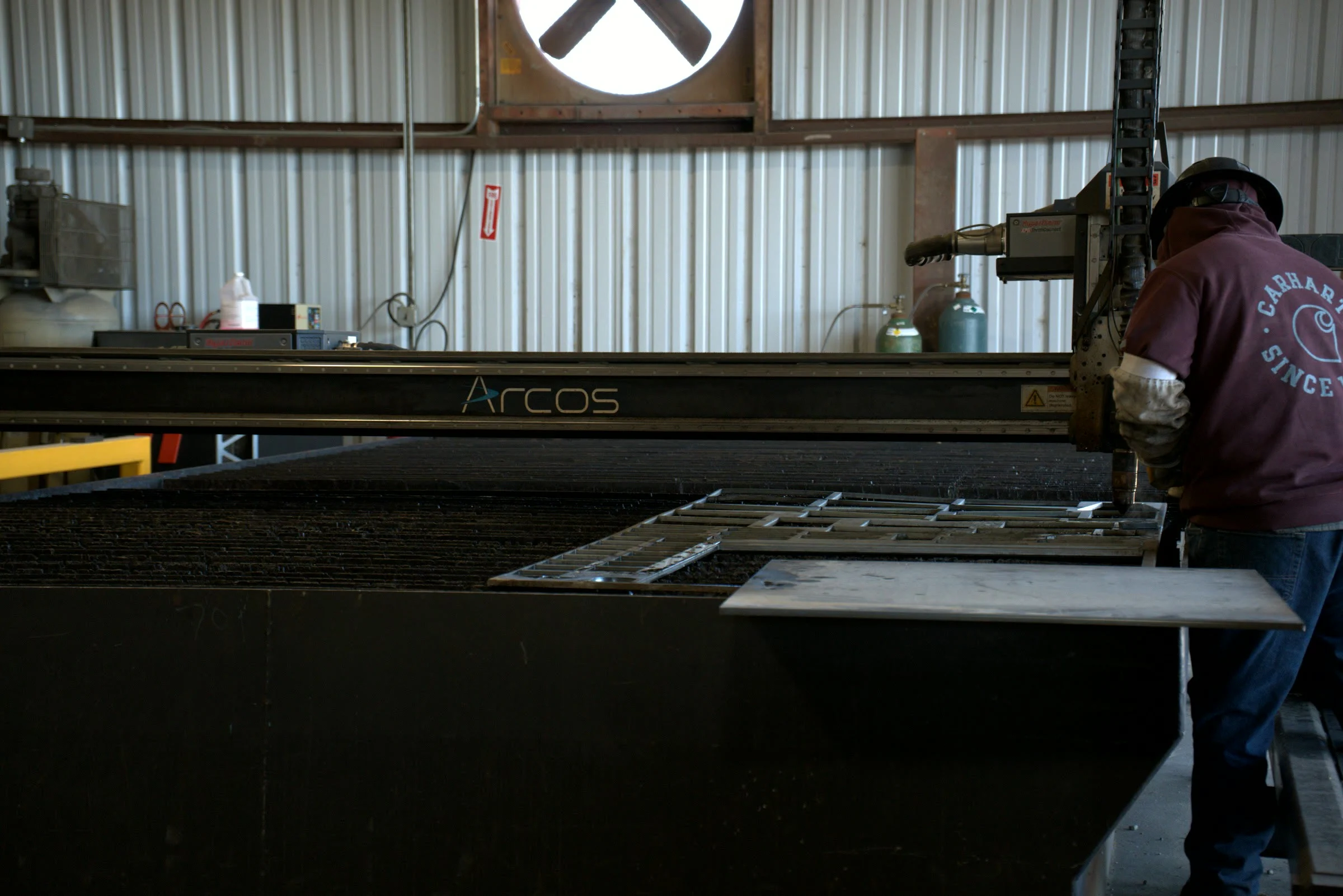
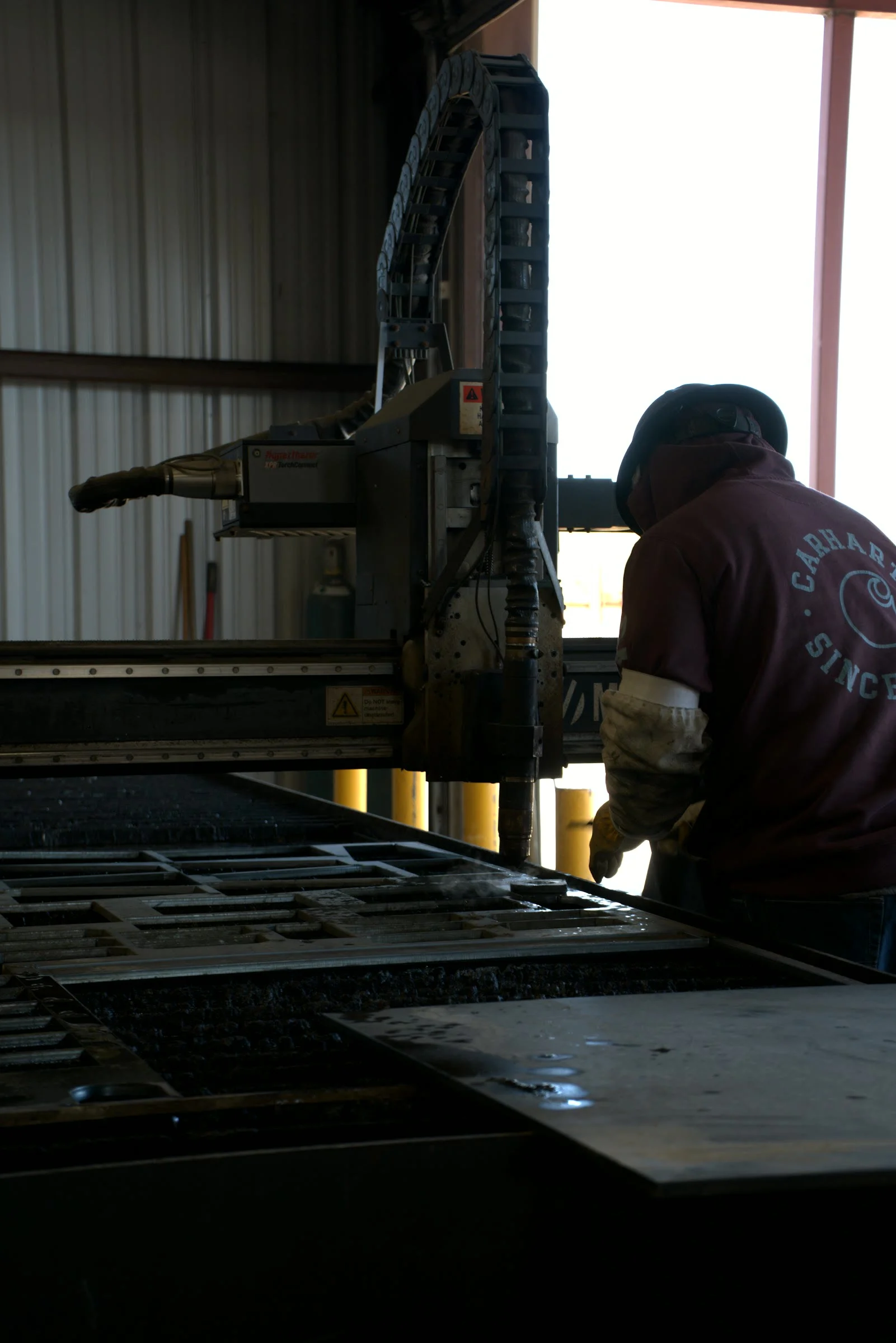
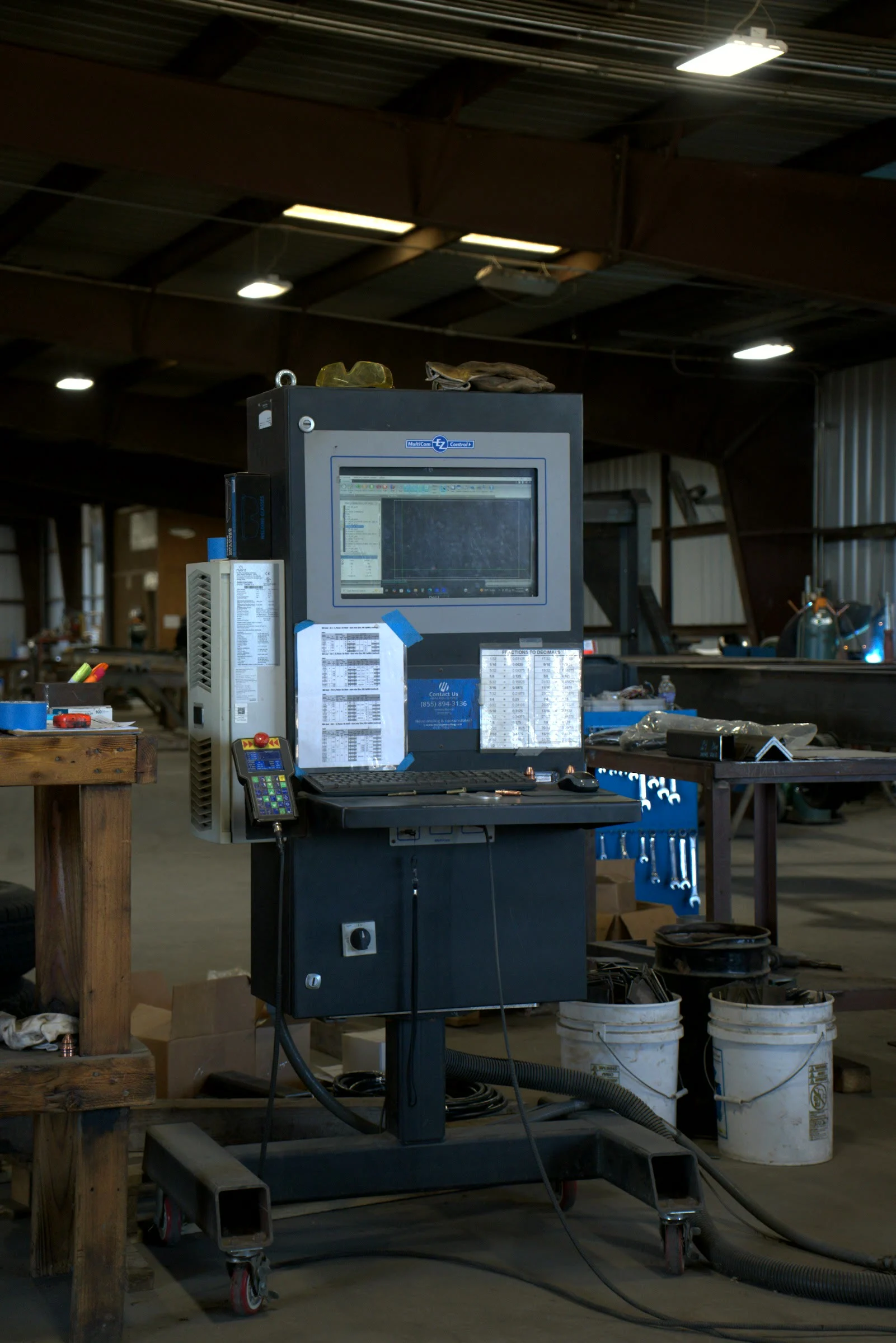
Open the Cutting pageCutting runs on band saws, cold saws, and plasma and oxy-fuel torches, including CNC plasma for repeatable, precise cuts. The shop also cuts by hand with a torch when a job calls for it. Plate and structural shapes both go through the same cutting floor, so a project that mixes flat plate with beams, angle or channel stays together. Precision part cutting keeps tolerances tight going into forming, welding or machining. Having several methods on hand lets the shop match the process to the material.
Press brake forming, plate bending, rolling and straightening.
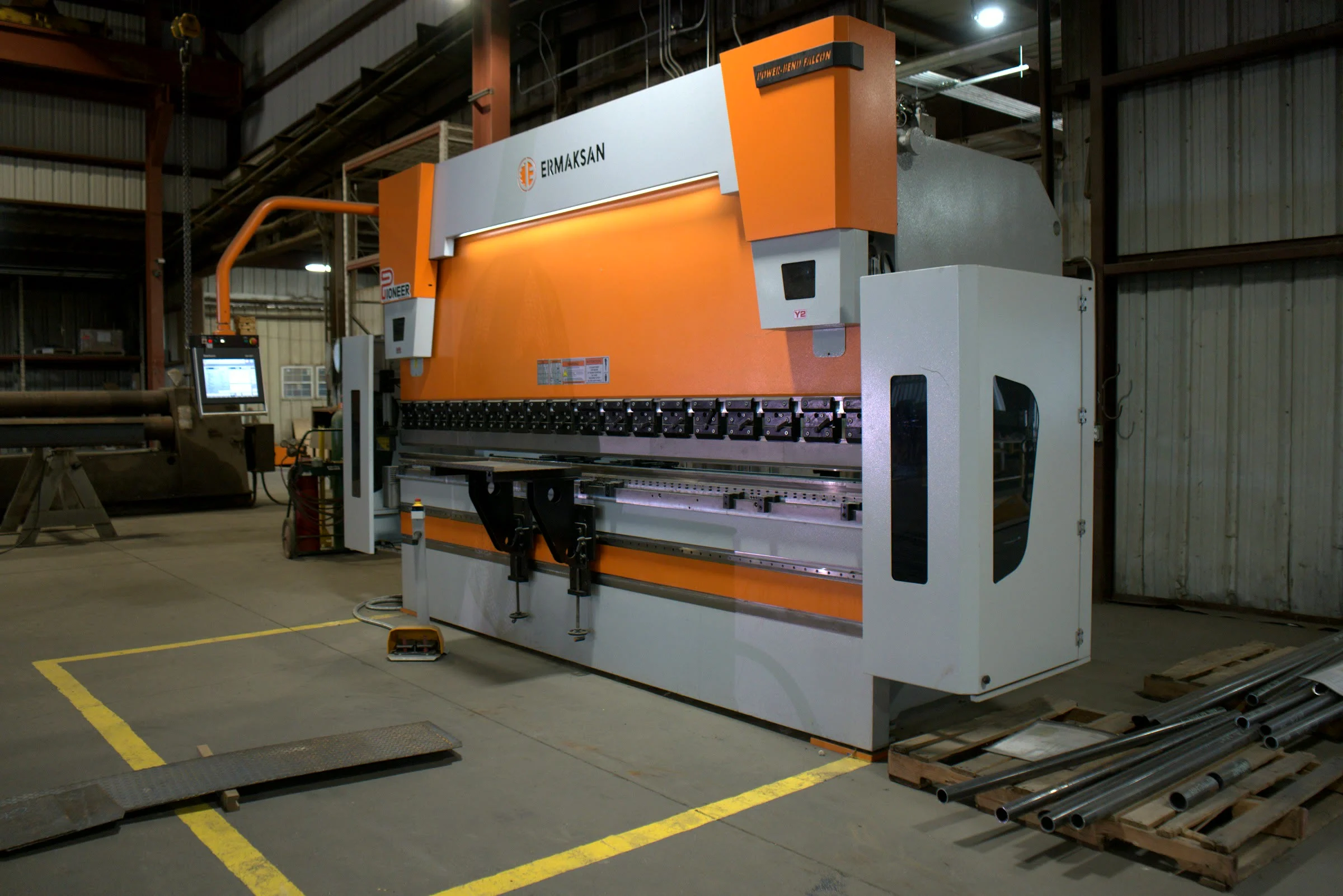
Open the Forming and Bending pageThe shop forms and bends steel on a press brake, rolls plate and shapes into curves, and straightens material that has warped or bent out of tolerance. Custom forming covers jobs that do not fit a standard bend or roll, where the shop works the piece to the shape a drawing calls for. Forming happens after cutting and before welding on most jobs, so keeping it in house means plate and shapes never leave for a separate vendor and wait to come back. A project moves on one schedule instead of several.
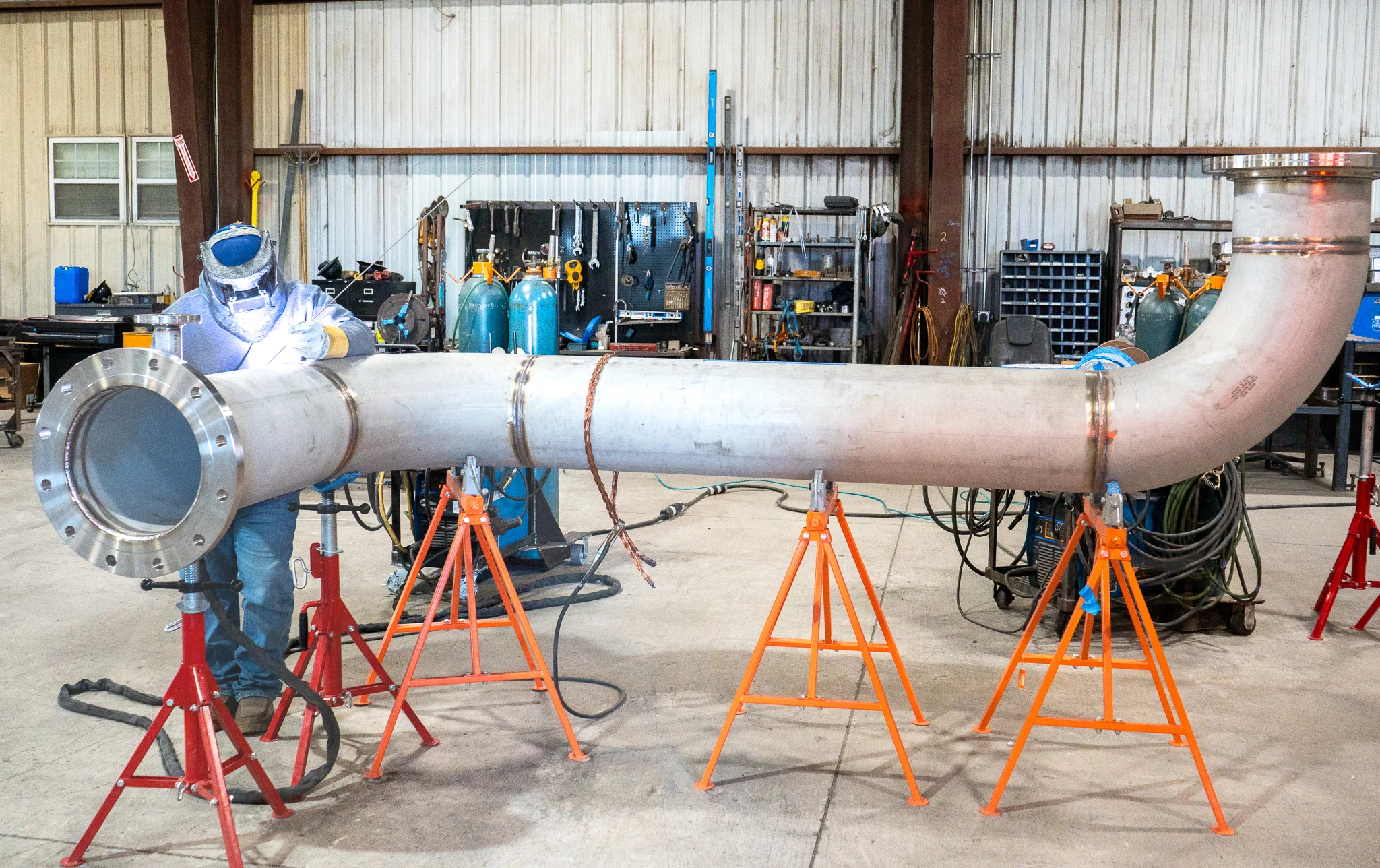
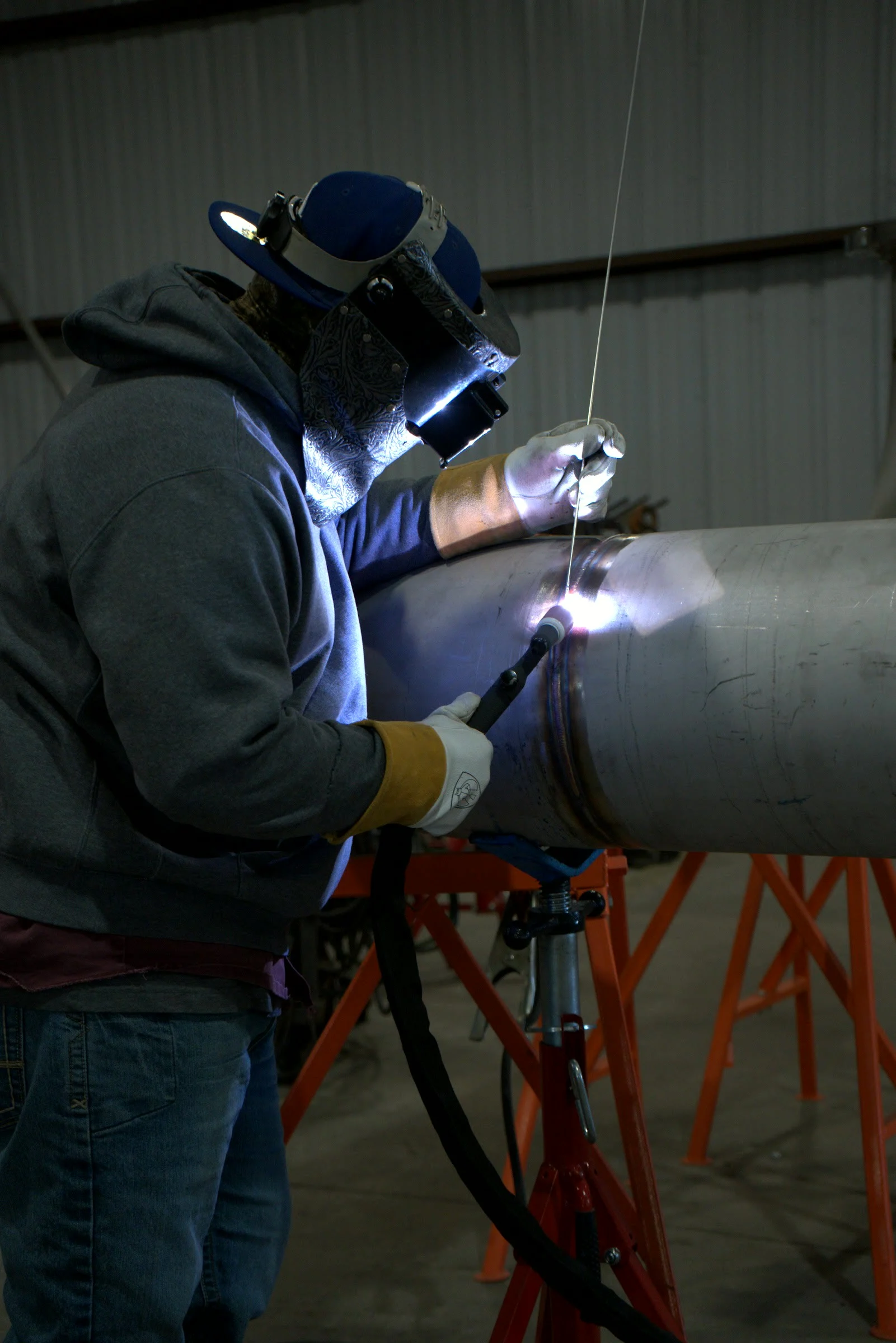
Welders run FCAW, GMAW/MIG, SMAW/Stick and GTAW/TIG in carbon steel, stainless steel and aluminum. The shop welds pipe and structural steel, with fillet and groove joints and multi-pass welds on thicker material. Every weld is controlled to a WPS, PQR and WPQ, and the work follows AWS D1.1, ASME Section IX, B31.3 and other codes depending on what the job requires. A Certified Welding Inspector reviews joints on the floor while the work is in progress, and each weld is documented to the procedure that produced it.
Standards: AWS D1.1, ASME Section IX, B31.3, WPS/PQR/WPQ
Drilling, tapping and CNC machining for precise holes and connections.
Open the Machining and Drilling pageDrilling, tapping, reaming and countersinking happen on the shop floor with drill presses and magnetic drills, with precision hole layout so brackets, flanges and connections line up the first time. Basic machining and CNC machining cover work that needs closer tolerances than a drill press can hold. These steps usually come after cutting and forming and before fit-up, since a hole or a machined surface has to be right before the next piece is welded or bolted to it. A hole pattern or a tapped connection is finished on the same floor as the rest of the part.
Structural fit-up, tack welding and mechanical assembly before final weld-out.
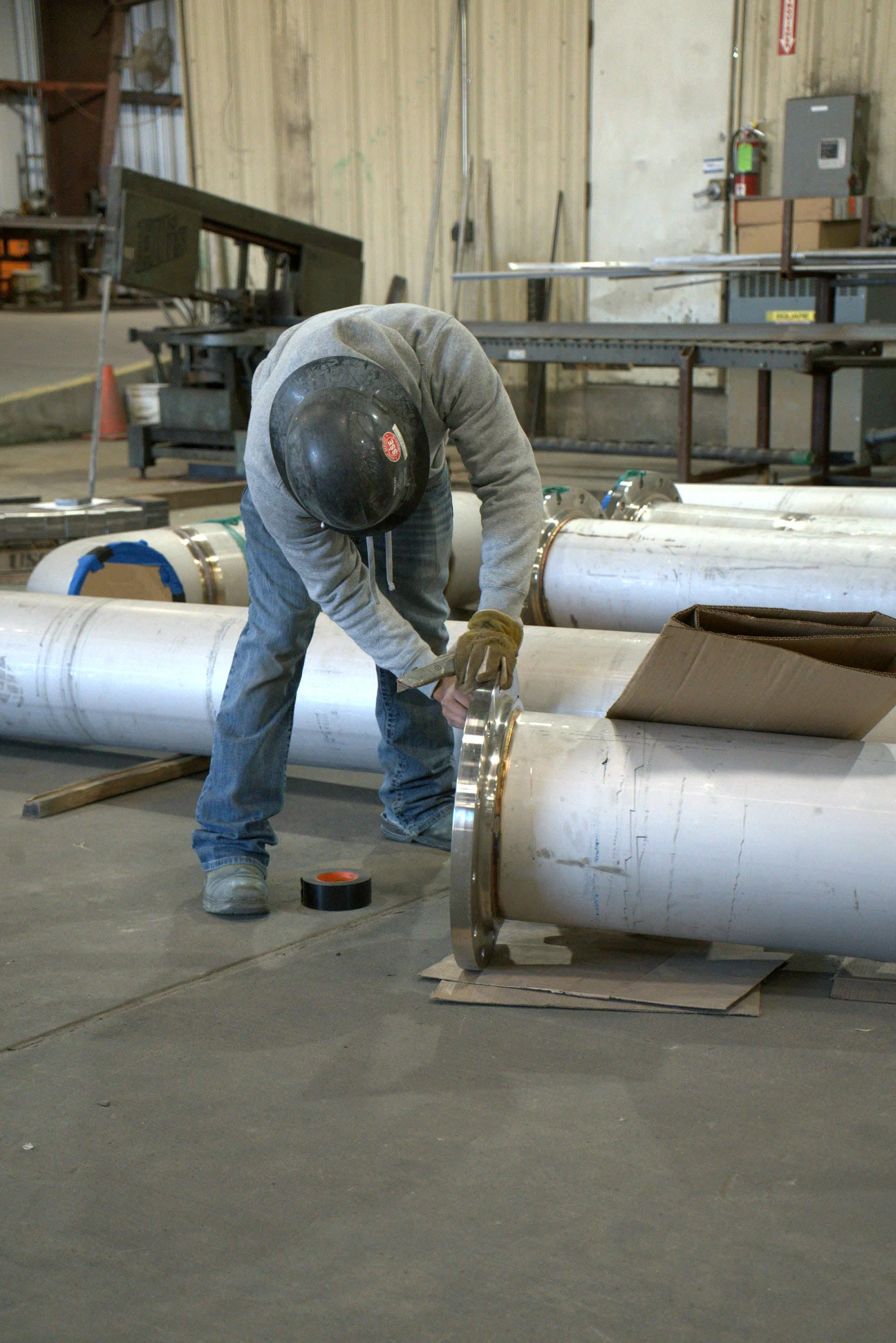
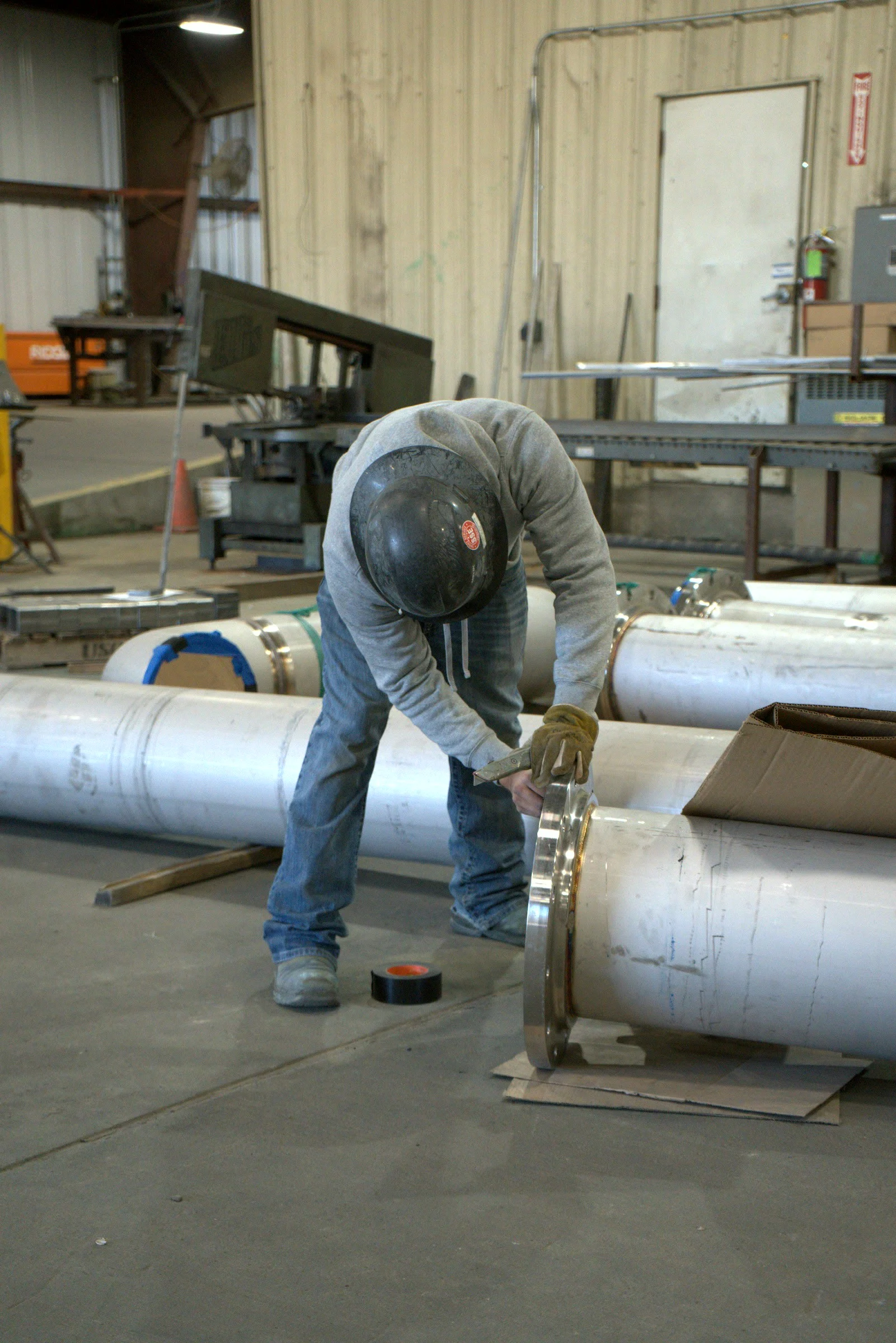
Open the Fit-Up and Assembly pageFit-up is where individual pieces become one assembly. The shop tack welds parts into position for structural fit-up, builds sub-assemblies, and handles mechanical assembly and bolt-up work before final welding or shipping. Field-installation preparation is part of the same step, since an assembly that will be bolted together on site needs to fit the first time it goes up. Getting fit-up right before final welding also keeps distortion down, which matters on anything headed to inspection.
Grinding, surface prep and coating, with galvanizing and powder coat coordination.
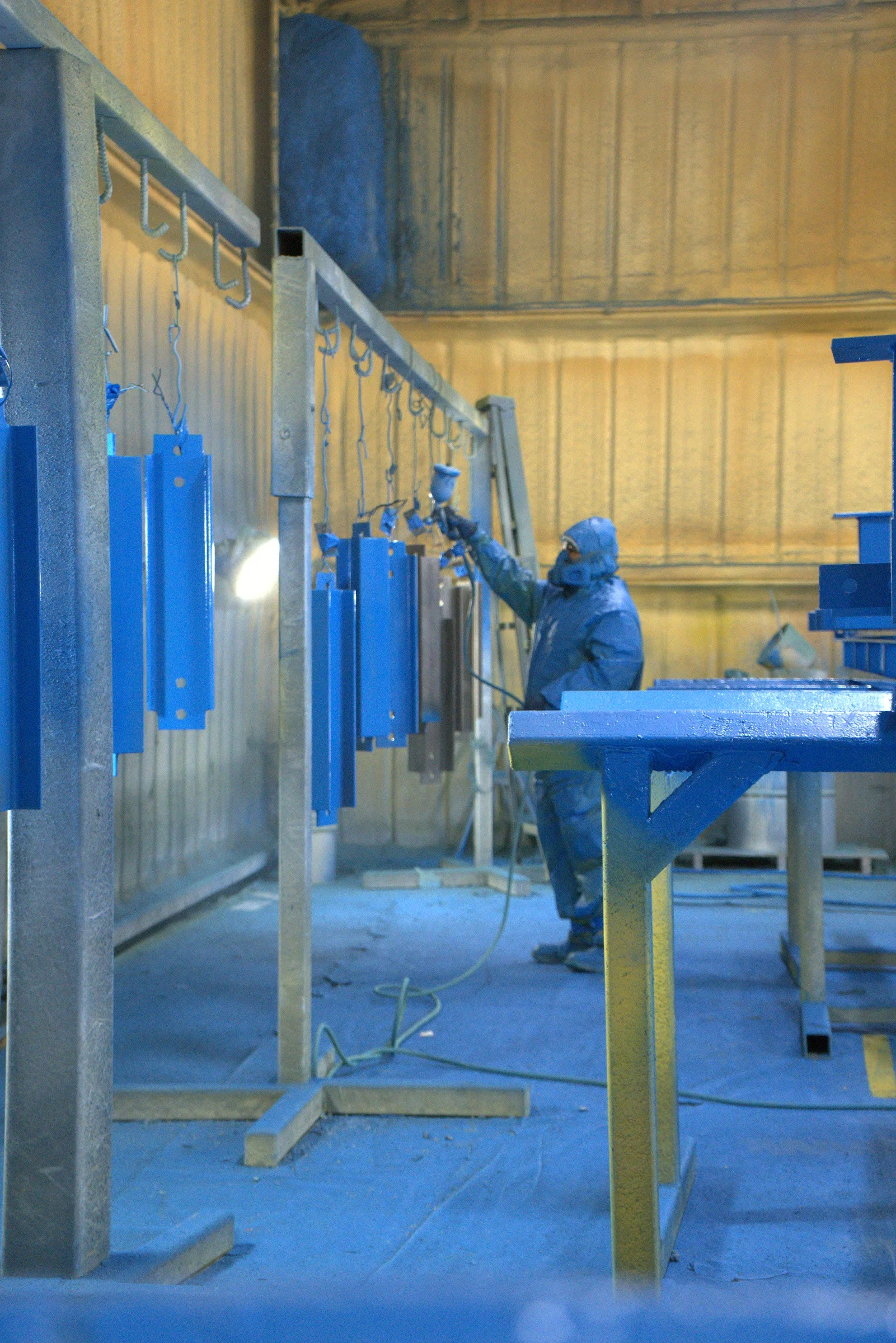
Open the Finishing pageFinishing starts with grinding, deburring and weld cleanup, then moves into surface preparation and sandblasting to get a piece ready for coating. The shop applies primer, paint and industrial coatings itself, and coordinates galvanizing and powder coating with outside providers when a job calls for either finish. Surface prep is matched to the coating going over it, and coordinating the outside finishes from the shop keeps a multi-step finish on one schedule.
Fit-up, dimensional and weld inspection with heat-number traceability.
Open the Quality Control pageQuality control runs through the whole job, starting before the first weld. The shop checks fit-up and dimensions before welding, inspects welds visually, and keeps material traceability through heat-number tracking so every piece can be traced back to its source material. Welding procedure control and welder qualification records back up every weld, and a Certified Welding Inspector signs off on the floor. NDT runs to the customer's spec when required, and the shop is ITP friendly for jobs that need one. Inspection documentation, paint reports and a final inspection close out the paper trail before a piece ships.
Standards: CWI on Site, NDT per customer spec, ITP friendly
Drawing review, takeoffs and production planning ahead of the shop floor.
Open the Engineering and Production Support pageBefore a piece is cut, the shop reviews the customer's drawings and works out what the floor needs from them: material takeoffs, cut lists, weld maps and a bill of materials. It interprets shop drawings, produces its own fabrication drawings and detailing when a job needs them, and programs CNC equipment for jobs that call for it. Production planning ties those pieces into a schedule the floor can run against. The planning is done by the people who will build the part.
From a single prototype to full production runs and emergency fabrication.
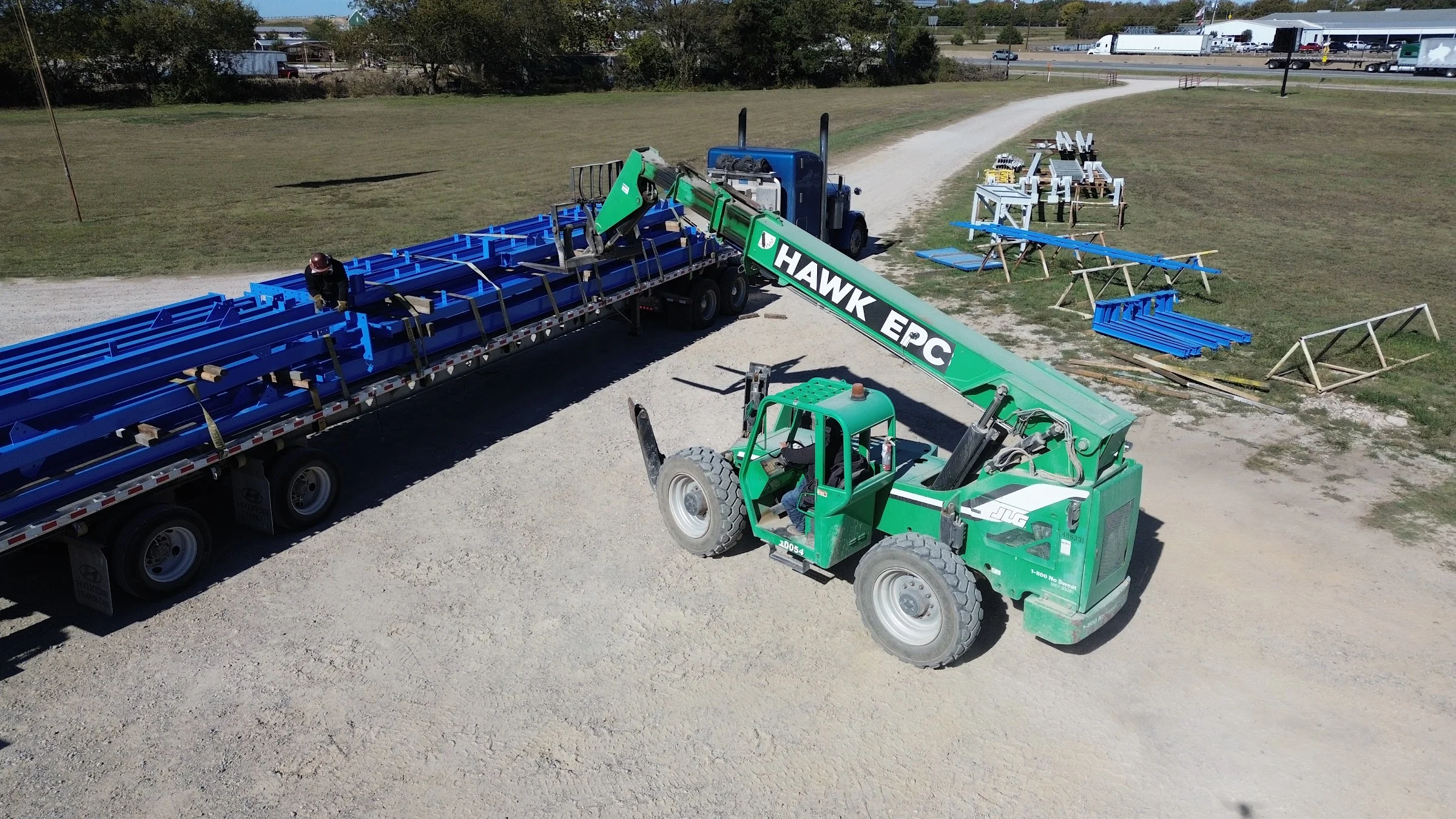
Open the Project Capabilities pageThe shop takes on work at any scale, from a one-off custom piece or a prototype through small-batch and full production runs. It builds structural steel packages and equipment and machinery supports, and handles repair and modification work on equipment already in service. Field measurements are taken directly when a job needs an exact fit before fabrication starts, and the shop runs emergency and expedited fabrication when a schedule will not allow a normal lead time.